


20 May How Adventure Stories Inspire Young Readers To Learn, Explore, and Grow
Adventure stories have a special kind of magic for young readers. They open a door to brave choices, curious questions, exciting places and surprising discoveries. For children aged 7–10, this can be exactly the spark they need to read more often, think more deeply and see learning as something active, imaginative and fun.
For parents, teachers and schools, adventure stories offer more than entertainment. They can support reading confidence, introduce geography and history, encourage problem-solving and help children connect books with the real world.
At home, an adventure story can turn bedtime reading into a journey. In the classroom, it can become the starting point for maps, timelines, research tasks, creative writing and hands-on discovery. For Australian families, from Sydney and the Northern Beaches to Melbourne, Brisbane and beyond, adventure books can help children explore the world from a reading corner, school library or sunny spot in the backyard.
Why Adventure Stories Capture Children’s Imaginations
Children are natural explorers. They ask questions, notice small details and often wonder what might be around the next corner. Adventure stories tap into that curiosity by giving young readers a reason to keep turning the page.
The Joy Of Exploring New Places
A good adventure story might begin with a mysterious map, a journey through the jungle, a visit to a famous landmark, a wildlife encounter or a problem that needs solving. These story ingredients help children feel involved. They are not just reading about what happens. They are predicting, imagining, questioning and cheering the characters on.
Adventure stories for young readers are especially powerful because they combine excitement with structure. These stories usually include:
- A clear goal
- A challenge to overcome
- A sense of progress
That makes the reading experience feel rewarding, particularly for children who are still building confidence.
For reluctant readers, this can make a real difference. Instead of feeling like they are being asked to “do reading”, they feel like they are joining an adventure.
Characters Children Can Cheer For
Children often connect with stories through characters first. A relatable character can help a young reader imagine themselves as brave, clever, kind or curious.
In adventure books for kids, characters do not need to be fearless superheroes. In fact, they are often more meaningful when they feel real. They might feel nervous before trying something new. They might make a mistake. They might need help from a friend, teacher, parent or guide.
That matters because children are learning how to manage their own challenges too. When a character keeps going, asks questions or works as part of a team, young readers see that courage can be gentle and everyday.
Courage might mean having a go at a tricky puzzle, asking for directions, trying again after getting something wrong or helping a friend. These are small story moments, but they can have a lasting effect.
How Adventure Stories Build Reading Confidence
Many parents and teachers are looking for ways to support reading motivation for children. This is especially true for children who may see books as hard work rather than enjoyment.
Adventure books can help because they offer momentum. A mystery, a journey or a challenge gives children a reason to continue. They want to know what happens next.
Short Chapters, Big Questions, and Page-Turning Moments
For children aged 7–10, the best adventure stories often include clear language, short chapters, humour, warmth, illustrations and small page-turning moments. A page-turning moment does not need to be frightening or intense. It might be as simple as finding a clue, spotting an animal, discovering a hidden path or wondering whether the character will solve a puzzle.
These moments encourage children to read one more page, then another. Over time, that sense of progress can build confidence.
Parents can support this by asking simple prediction questions while reading together, such as, “What do you think will happen next?” or “What would you do?” These questions build comprehension without making reading feel like a test.
Reading For Fun and Learning
The best educational adventure books do not feel like textbooks. They begin with story, then gently open up learning along the way.
A child might read about a character exploring a historic trail, then become curious about real events. They might follow a journey through a rainforest, then want to learn about animals and habitats. They might see a map in a book, then start making their own.
This is the strength of story-based learning. It gives facts a context. Instead of memorising information in isolation, children connect ideas to people, places, problems and emotions.
Adventure learning for kids can support literacy, geography, history, science, nature, creative writing, visual learning and problem-solving. It can also encourage discussion, because children naturally want to talk about the places, characters and surprises they discover.
For teachers, this makes adventure stories useful across subjects. For parents, it makes reading feel more meaningful at home. For children, it makes learning feel like part of the fun.
How Adventure Stories Build Confidence and Resilience
Adventure stories often include challenges, but for young readers these challenges should be handled with care. The goal is not to overwhelm children. It is to show that problems can be approached step by step.
A character might get lost and need to read a map. They might misunderstand something and need to ask a better question. They might try a solution that does not work, then try another. They might need to listen, cooperate or slow down.
These story moments help children see problem-solving in action.
One of the healthiest lessons children can take from adventure stories is that mistakes are part of learning. In a strong children’s adventure story, a character does not always get everything right. They may rush ahead, forget a clue or make a guess that leads to a funny problem. What matters is what happens next:
- Do they try again?
- Do they apologise?
- Do they ask for help?
- Do they notice something new?
For a child who worries about being wrong, this can be reassuring. Books can help them see that learning is not about being perfect. It is about staying curious.
Adventure stories can also show that courage is not always dramatic. For children, courage might be reading aloud in class, trying a new activity, visiting a new place or asking a question when they do not understand. When books present courage in this way, children can recognise it in their own lives.
How Adventure Stories Connect Children With The Real World
Adventure books are often a child’s first invitation into bigger topics: geography, wildlife, history, culture, travel and the environment.
A story set near a famous landmark can lead to a map activity, while a journey through a historic destination can open up conversations about culture, geography and the past. For example, Alberto’s Machu Picchu adventure can help young readers explore an ancient landmark while connecting the story to simple lessons about history, travel and discovery.
This is where books that inspire young readers can have an impact beyond reading time.
From Story Pages To Maps And Timelines
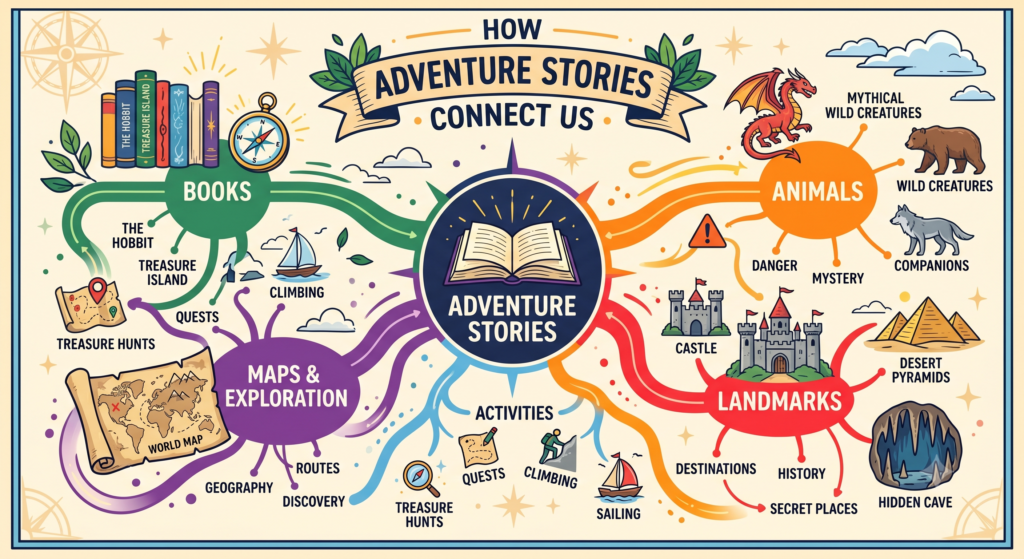
Maps are a natural companion to adventure stories. Parents and teachers can use them to help children follow a journey, compare locations or imagine where a character might go next. This can be as simple as pointing to a place on a wall map or as creative as drawing a route inspired by the book.
Timelines can work in a similar way. If a story connects to history, children can place events in order, compare past and present, or create a simple “before, during and after” chart.
Wildlife, Nature, and Outdoor Learning
Adventure stories can also encourage outdoor learning. After reading, children might look for animal tracks, sketch a plant, listen for bird calls, compare a local habitat with one in the story or create a mini field journal.
For Sydney and Northern Beaches parents, a visit to the zoo, a coastal walk, local park outing or weekend library trip can extend the adventure beyond the page. You can also continue the journey with Alberto’s Sydney Zoo adventure, where young readers discover wildlife, curiosity and learning through a fun story setting.
These activities remind children that books are not separate from the world. They are one way of entering it.
Why Adventure Stories Work Well In Classrooms
Teachers often need books that can do more than fill quiet reading time. A good classroom adventure book can support literacy, geography, history, creative writing, research and discussion.
Classroom Activities For Adventure-Based Learning
Adventure stories work well because they give students a shared experience. A class can read the same story, then branch into different activities depending on the learning goal.
Teachers can extend the learning through activities such as designing a map, writing an explorer journal, creating a travel postcard, researching an animal, building a timeline or writing a new chapter from another character’s point of view.
Supporting Different Learning Styles
This flexibility makes adventure books useful for different learning styles. Visual learners may enjoy maps and illustrations. Active learners may enjoy outdoor observation or role play. Creative writers may enjoy diary entries and postcards. Curious question-askers may enjoy research and discussion.
Interactive elements can be especially helpful. Puzzles, colouring, drawing prompts and search-and-find activities give children another way to engage with the story.
This matters because not every child falls in love with reading in the same way. Some need humour. Some need facts. Some need pictures. Some need a mystery. Some need to move between reading, talking, drawing and doing.
Adventure stories can bring those pathways together.
How Parents Can Encourage Adventure Reading At Home
Parents do not need to create a perfect reading program to help children enjoy books. Small, consistent habits can make a big difference.
The key is to make reading feel warm, relaxed and connected to the child’s interests. If your child loves animals, choose adventure books with wildlife. If they enjoy puzzles, look for interactive books. If they ask questions about the world, try travel stories for children. If they like drawing, invite them to sketch a scene after reading.
Create A Reading Adventure Routine
A simple reading adventure routine can help. Choose a regular time, keep a map or notebook nearby and read a few pages together. After reading, ask one curiosity question, such as, “Where did the story take us today?” or “What would you like to find out more about?”
Let Children Choose Their Own Adventure
Choice is also important. When children choose books that match their interests, they are more likely to feel ownership over reading. Parents can guide the options, but children should have room to follow what excites them.
Offer a few choices rather than an overwhelming shelf: a wildlife adventure, a mystery adventure, a travel story, a history-inspired story or a search-and-find activity book. Then let your child decide.
This helps children see reading as something they can shape, not just something they are told to do.
Where Alberto’s Adventures Fits In
Alberto’s Adventures is built around the idea that stories can be exciting, educational and interactive at the same time. Created by Sean Daly, the series encourages children to explore the world through travel-inspired stories, puzzles and hands-on learning activities.
Stories That Spark Curiosity
The series follows Alberto Alpaca through adventures inspired by real-world places, learning themes and child-friendly discovery. The books blend rhyming storytelling, search-and-find activities, puzzles, maps and educational ideas to help children connect reading with exploration.
Rather than presenting learning as a list of facts, Alberto’s Adventures invites children into a journey. They can follow the character, notice details, search the pages, ask questions and connect the story to the wider world.
Activities That Extend The Adventure
Interactive activities are one of the strengths of the series. Search-and-find pages encourage careful observation. Puzzles build problem-solving. Colouring supports creativity. Maps introduce geography. Questions encourage discussion. Drawing prompts help children respond personally to the story.
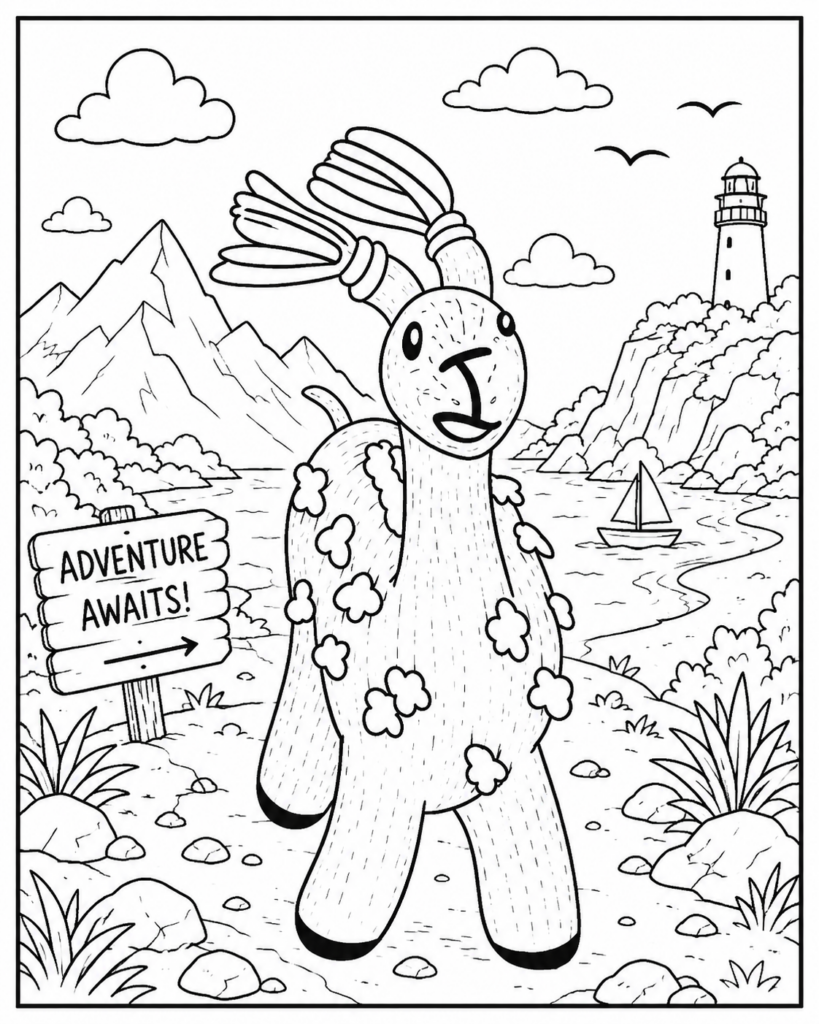
For parents, the books offer a screen-free way to encourage curiosity and family bonding. For teachers, they can support literacy, geography, history, wildlife learning and classroom activities. For children, they make learning feel like an adventure.
Final Thoughts
Adventure stories for young readers do more than entertain. They help children build reading confidence, explore new places, practise problem-solving and connect books with the real world.
For children aged 7–10, adventure books can be a bridge between imagination and learning. They can introduce geography, history, wildlife, nature and culture in a way that feels playful rather than heavy. They can also help reluctant readers discover that books are not just something to finish. They are something to follow, question and enjoy.
For parents, teachers and schools, adventure stories offer a warm and practical way to inspire curiosity. Whether a child is reading at home in Sydney, exploring a classroom map in Brisbane, visiting a library in Melbourne or drawing a wildlife scene after school on the Northern Beaches, every story can become a starting point.
Alberto’s Adventures continues that journey by combining storytelling, travel, rhyming language, search-and-find fun and educational activities. For young readers, it is a reminder that learning can be joyful, active and full of discovery.
Families looking for engaging adventure books that encourage curiosity, imagination and learning can explore the Alberto’s Adventures collection and discover stories inspired by travel, culture and exploration.
Sorry, the comment form is closed at this time.