


10 Feb Fun Facts About Llamas, Alpacas and Other Andean Animals for Kids
If your child has ever asked what the difference is between a llama and an alpaca, or why alpacas live in the mountains, you are not alone. Many Australian parents and teachers look for simple, accurate llama and alpaca facts for kids that explain these animals in a way children can actually understand.
Through simple facts and storytelling, children learn about llamas, alpacas and other Andean animals, discovering how these animals live, survive and adapt in the mountains with Alberto Alpaca.
What Are The Andes Mountains, And Why Do So Many Unique Animals Live There?
The Andes Mountains are a long mountain range in South America that stretches through countries like Peru, Bolivia and Chile. These mountains are very high, cold and rocky, which means animals that live there have special features to help them survive.
Animals in the Andes often have:
- Thick fur to stay warm
- Strong legs for climbing steep paths
- Lungs that work well at high altitudes
Alberto Alpaca comes from this mountain region, where animals and people have learned to live closely together for thousands of years.
What Is The Difference Between A Llama And An Alpaca?
Many kids think llamas and alpacas are the same animal, but they are actually different. Understanding these differences helps children learn how animals adapt to their environment.
How can kids tell llamas and alpacas apart?
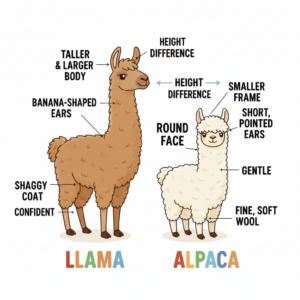
Llamas:
- Are taller and larger than alpacas
- Have long, curved ears
- Were traditionally used to carry supplies along mountain paths
Alpacas:
- Are smaller and fluffier
- Have short, straight ears
- Are mainly kept for their soft wool
This makes alpaca facts for kids especially fun, because their wool is one of the softest natural fibres in the world.
What Other Animals Live In The Andes Mountains?
Llamas and alpacas are not the only animals living high in the Andes. Many other fascinating animals call this region home.
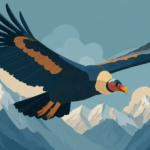
What is an Andean condor?
The Andean condor is one of the largest flying birds in the world. It has huge wings that help it glide over mountain valleys without flapping very much.
Fun fact: Condors can fly for hours just by riding warm air currents.
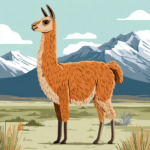
What is a vicuña?
The vicuña is a smaller cousin of the alpaca. Its wool is incredibly fine and valuable, and it lives wild in the mountains.
Fun fact: Vicuñas are very shy and fast runners.
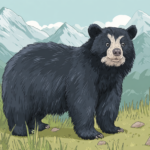
Are there bears in the Andes?
Yes. The spectacled bear lives in the Andean forests. It gets its name from the light markings around its eyes that look like glasses.
Fun fact: It is the only bear species native to South America.
Why Are Andean Animals Important To People Who Live There?
Animals in the Andes are not just wildlife. They are part of everyday life, culture and history.
People rely on these animals for:
- Warm clothing made from wool
- Carrying supplies across mountain trails
- Cultural traditions passed down through families
Teaching kids about Andean animals helps them understand how people and animals can live together respectfully, especially in challenging environments.
This is an important lesson for Australian children learning about sustainability and caring for nature.
What Fun Activities Can Kids Do To Learn About Llamas And Alpacas?
Learning sticks better when kids can play, draw and imagine.
Some easy activity ideas include:
- Drawing your own alpaca or llama and naming it
- Making animal fact cards using one fun fact per animal
- Playing a guess-the-animal game using clues about ears, fur or habitat
You can find more hands-on ideas on Alberto’s Adventures activities page.
Who Is Alberto Alpaca, and How Does He Represent Andean Animals?
Alberto Alpaca is a character inspired by the real animals of the Andes. In the story, Alberto travels along the famous Inca Trail, learning about courage, friendship and problem-solving along the way.
His adventure helps children connect animal facts to real places and emotions, making learning more meaningful.
Families can meet Alberto in:
- The paperback book: https://albertosadventures.com.au/product/inca-trail-and-machu-picchu/
- The ebook edition: https://albertosadventures.com.au/product/albertos-adventure-inca-trail-and-machu-picchu-paper-ebook/
This engaging book about Machu Picchu is perfect for families planning a trip or dreaming of one day visiting Peru, helping children feel confident and curious before they travel there.
How Do Animal Stories Help Children Understand The World?
Animal stories are powerful learning tools for children.
They help kids:
- Recognise and name emotions through characters
- Learn about different habitats and cultures
- Understand teamwork, kindness and problem-solving
Adventure stories set in real places, like the Andes, give children a sense of global awareness while still feeling safe and relatable.
Keep Exploring Animals And Cultures Through Stories
Learning about llamas, alpacas and Andean animals helps spark curiosity about the wider world. When children connect real animal facts with story and adventure, geography and culture start to make sense in a way that feels fun and memorable.
If your child enjoys learning through stories, you can follow Alberto Alpaca on his journey along the Inca Trail and into the Andes at https://albertosadventures.com.au/.
FAQs
What is the difference between a llama and an alpaca?
Llamas are larger with curved ears and were used as pack animals. Alpacas are smaller with fluffy wool and are mainly kept for fibre.
Where do llamas and alpacas live?
They live in the Andes Mountains of South America, especially in Peru and Bolivia.
What animals live near Machu Picchu?
Animals include alpacas, llamas, Andean condors, spectacled bears and vicuñas.
Why are alpacas important to people?
Alpacas provide warm wool and are part of Andean culture and history.
Are there kids books about the Inca Trail?
Yes. Alberto’s Adventure introduces children to the Inca Trail through an animal-led story.
Sorry, the comment form is closed at this time.