
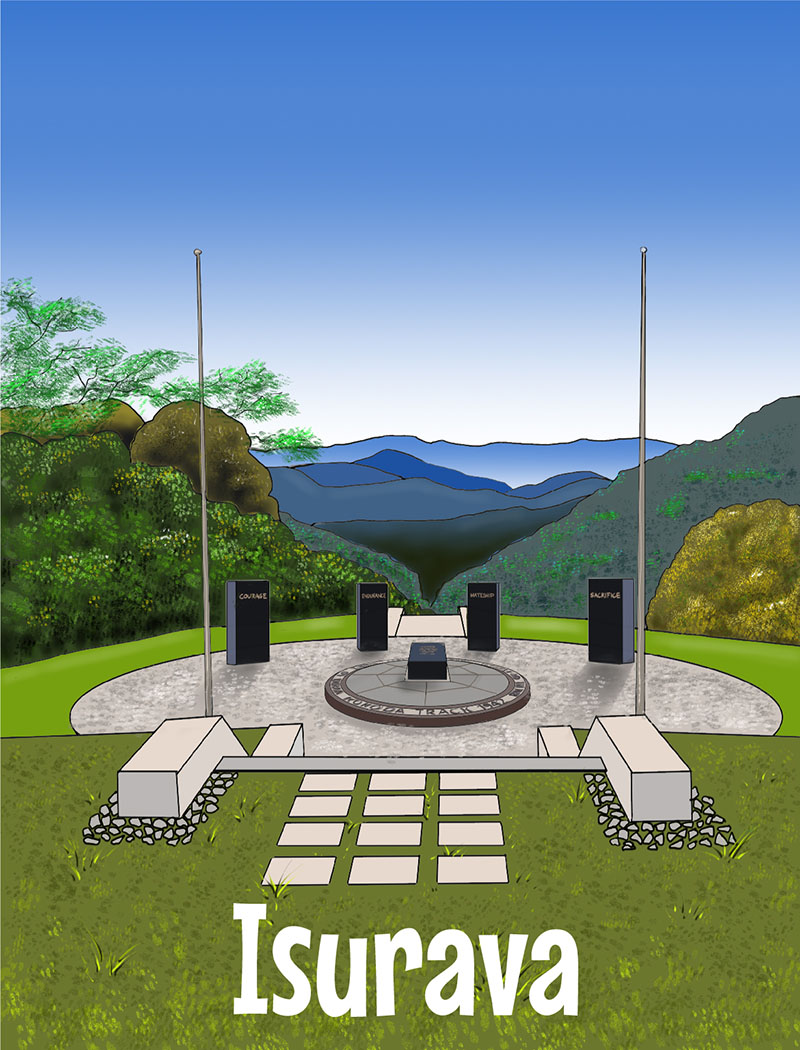
26th to 29th August 1942
The fighting around Isurava increased in intensity. The Japanese made a frontal attack down the line of the main track. The remarkable courage and resilience demonstrated by the Australian 39th Battalion was critical to the battle of Isurava and the fortunes of the whole Kokoda campaign.
The Japanese, described as big, powerful men, mounted a heavy assault. The Australians were described as unmoved and disciplined.
It was apparent that time was running out for the Australians. Heavy attacks on all sections began early in the morning. The company holding the northeast side of the perimeter near the current memorial was the major target.
The Japanese attacks became heavier and fiercer each time. Attacks continued through the day and by dusk the Australian hold on Isurava was weak. The Japanese attackers came forward in greater numbers, breaking through the Australian lines.
An Australian platoon came forward in support from the rear, including Private Bruce Kingsbury. Kingsbury rushed forward against machine gun fire, shooting a Bren Gun from his hip. He succeeded in clearing a path through the enemy for the platoon. It was a courageous action that made it possible for the diggers to recapture the position. Private Kingsbury was then seen to fall to the ground, shot by a sniper hiding in the woods.
Kingsbury was awarded a posthumous Victoria cross, the British Commonwealth’s highest award for bravery. His was the first Victoria Cross to be awarded in the south-west Pacific area. Kingsbury Rock (on page 9 of the book) is thought to be the spot where he was shot and has been named after Private Kingsbury.
The Australians had to move back towards Alola to establish a new defensive position. Brigadier Potts oversaw the battle from Alola, a village nearby. He sent orders for a fighting withdrawal to delay the enemy AT ALL COSTS.